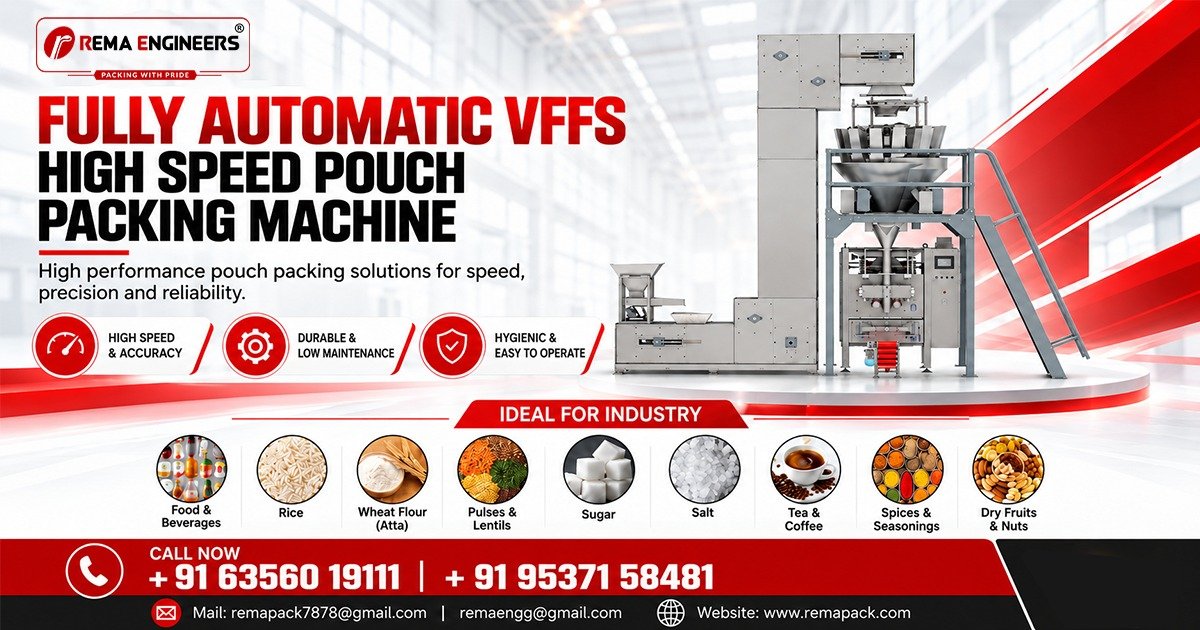



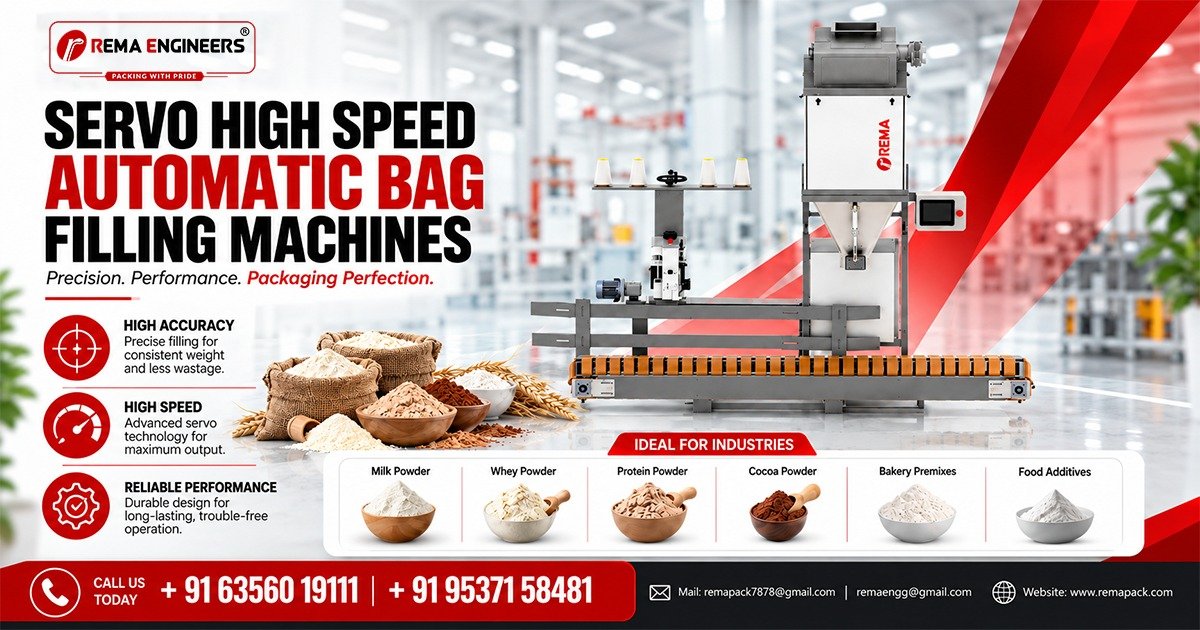
When packaging targets rise, slow filling cycles and inconsistent bag weights can disrupt dispatch schedules. Servo High Speed Automatic Bag Filling Machines In Andhra Pradesh offer a potential solution for suitable production lines, with Rema Engineers Pvt. Ltd. Pvt. Ltd. supporting equipment planning from Ahmedabad.
1. What Should a Packaging Plant Define Before Selecting a Servo Filling Machine?
A high-speed filling machine should be selected around the product, bag format, and required production output—not simply the maximum speed mentioned in a quotation.
For manufacturers in Andhra Pradesh, the first step is to identify the actual packaging requirement and the operating conditions under which the machine will run.
Start by documenting these details:
- Product type: Determine whether the material is a powder, granule, free-flowing solid, or another product.
- Bag specifications: Confirm the bag material, dimensions, opening, and required filling weight.
- Production target: Establish the number of bags required per hour or shift.
- Operating pattern: Identify the expected working hours, changeover frequency, and number of product variants.
- Packaging arrangement: Determine whether the machine will operate independently or connect to an existing production line.
These details help establish whether a servo-controlled automatic filling system is suitable for the application.
2. How Does Servo Control Fit Into High-Speed Bag Filling?
Servo technology allows controlled movement of machine components through an electric motor and its control system. In a suitable filling application, this can help manage the movement of the filling mechanism according to the machine’s operating sequence.
However, servo control alone does not determine the final filling speed or weight consistency. The product characteristics, filling mechanism, bag handling arrangement, and control settings also matter.
A typical automatic bag-filling sequence may involve the following stages:
- Product feeding: Material is supplied from a hopper or an appropriate upstream feeding arrangement.
- Bag positioning: An empty bag is placed or presented at the filling station.
- Filling: The metering or dosing mechanism delivers the required quantity of product.
- Weight or fill verification: Where the machine includes a suitable checking system, the filled quantity is verified.
- Bag discharge: The filled bag moves to the closing, sealing, conveying, or subsequent packaging stage.
The actual sequence depends on the machine configuration. Buyers should confirm which stages are automated and which require separate equipment.
3. Which Machine Parameters Have the Greatest Effect on Production?
The practical output of a packaging line depends on more than the rated cycle speed.
| Parameter | Why it matters |
| Target filling weight | Determines the required dosing range and filling arrangement |
| Product flow characteristics | Affect feeding, dosing consistency, and material handling |
| Bag dimensions | Influence bag positioning and compatibility with the filling station |
| Required bags per hour | Helps establish the appropriate machine capacity |
| Changeover requirements | Affect the time needed to switch between products or bag sizes |
| Downstream capacity | Determines whether filled bags can be transferred without creating a bottleneck |
| Available floor space | Influences machine placement and material flow |
For Servo High Speed Automatic Bag Filling Machines In Andhra Pradesh, the required output should be assessed across a complete production cycle.
For example, a machine may fill bags rapidly but still experience delays if operators need to reposition bags manually or if the downstream sealing equipment cannot handle the same throughput.
Buyers should therefore evaluate the complete packaging process rather than comparing filling speed alone.
4. Can the Machine Handle Different Products and Bag Formats?
Product compatibility is one of the most important technical considerations.
A filling system designed for free-flowing granules may not be suitable for a fine powder without changes to the feeding and dosing arrangement. Similarly, products that bridge, generate dust, or vary in bulk density may require additional engineering consideration.
Before finalising the equipment, discuss:
- Product particle size and flow behaviour.
- Bulk density and any variation between batches.
- Whether the material produces dust or requires containment.
- The required filling-weight range.
- Bag width, length, material, and opening arrangement.
- The frequency of product and bag-size changes.
Customization may be necessary when a plant handles multiple bag formats or products with different flow characteristics.
The objective is to establish a workable machine configuration before manufacturing begins, reducing the risk of discovering compatibility issues during installation.
5. What Should Be Ready at the Installation Site in Andhra Pradesh?
A high-speed automatic filling machine needs sufficient space for operation, material supply, bag movement, and maintenance.
Before dispatch and installation, review the following site conditions:
- Floor space: Allow room for the machine, operator access, and material loading.
- Floor and foundation: Confirm that the proposed location can support the equipment and its operating loads.
- Electrical supply: Verify the required voltage, phase, frequency, and connected load against the machine’s approved specifications.
- Material supply: Plan how product will reach the hopper or feeding system.
- Bag movement: Provide enough space for empty bags, filled bags, and transfer equipment.
- Downstream integration: Check compatibility with sealing, stitching, conveying, or other packaging equipment.
- Maintenance clearance: Keep service points and replaceable components accessible.
The exact utility and installation requirements should be confirmed from the selected machine’s technical documentation.
For projects outside Gujarat, installation planning should also account for coordination between the equipment supplier, the plant’s electrical team, civil contractors, and production personnel.
6. How Can Buyers Evaluate Machine Quality Before Placing an Order?
A supplier’s quotation should provide enough technical information to evaluate the proposed equipment.
Rather than relying only on photographs or a general product description, request details that relate directly to your production requirement.
Important checkpoints include:
- Construction materials used in product-contact areas.
- Fabrication quality and overall assembly.
- Accessibility of filling and cleaning components.
- Suitability of the dosing arrangement for the intended material.
- Control-system configuration and operator interface.
- Availability of operating instructions and electrical documentation.
- Inspection and acceptance procedures.
- Availability of replacement parts and technical assistance.
Where filling consistency is important, discuss the proposed method for checking filled weights during machine trials.
Buyers should also establish the acceptance criteria before ordering. The agreed product, bag size, target weight, operating conditions, and testing method should be clearly documented.
This makes it easier to compare competing quotations on an equivalent basis.
7. What Maintenance Practices Help Reduce Avoidable Downtime?
Routine maintenance should follow the machine manufacturer’s instructions and reflect the material being packed and the intensity of operation.
A practical maintenance plan should cover:
- Cleaning product-contact areas to prevent material buildup.
- Inspecting moving components for wear or abnormal movement.
- Checking fasteners and mechanical connections.
- Inspecting electrical connections and control components through qualified personnel.
- Checking the condition of feeding and dosing components.
- Reviewing sensors and other control devices for proper operation.
- Keeping suitable replacement parts available.
If filling weights begin to vary, operators should first check the product supply, bag positioning, material flow, and machine settings.
Do not adjust servo drives, electrical systems, or safety circuits without appropriate training and authorization. Persistent faults should be referred to qualified service personnel.
The recommended inspection frequency will depend on the machine design, operating hours, and product characteristics.
8. Services
Rema Engineers Pvt. Ltd. Pvt. Ltd. can be approached to discuss packaging requirements and the equipment support needed for a project.
The relevant service areas include:
- Requirement assessment: Review the product, bag format, target filling weight, and production expectations.
- Machine selection and planning: Identify suitable equipment configurations and discuss integration with the existing packaging line.
- Manufacturing and customization coordination: Discuss machine arrangements according to the confirmed application and technical requirements.
- Installation and technical support: Coordinate installation planning, commissioning requirements, operator guidance, and after-sales assistance.
Location
Andhra Pradesh has a varied industrial base, including food processing, pharmaceuticals, chemicals, agricultural processing, and other manufacturing activities. Automatic bag-filling equipment may be relevant wherever products need to be packed into bags at a defined weight and production rate. Equipment selection should reflect the material handled, the plant’s operating conditions, and the packaging format.
Relevant industrial and commercial locations include Visakhapatnam, Vijayawada, Guntur, Tirupati, Kurnool, Rajahmundry, Kakinada, Nellore, Anantapur, Kadapa, Eluru, Ongole, Srikakulam, Vizianagaram, Chittoor, Hindupur, Machilipatnam, Bhimavaram, Amaravati, Sri City, Visakhapatnam Special Economic Zone, Andhra Pradesh MedTech Zone, Krishnapatnam Industrial Area, Jaggayyapeta, and Puttaparthi.
Planning Your Requirement With Rema Engineers Pvt. Ltd. Pvt. Ltd.
For businesses evaluating Servo High Speed Automatic Bag Filling Machines In Andhra Pradesh, early technical discussions can help clarify machine capacity, bag compatibility, product handling, and installation requirements.
Rema Engineers Pvt. Ltd. Pvt. Ltd. provides industrial packaging equipment support through its website, remapack.com, with manufacturing support from Ahmedabad, Gujarat, India.
Buyers can discuss their product characteristics, expected output, bag dimensions, and plant layout to determine the appropriate equipment configuration.
Installation arrangements, commissioning requirements, and after-sales support should be agreed upon according to the project scope and site location.
The aim is to establish a clear technical understanding before the purchase order is finalised.
Frequently Asked Questions
Q: How do I select the right servo automatic bag-filling machine for my production line?
A: Start with the product type, required bag weight, bag dimensions, and target bags per hour. Then evaluate the filling mechanism, automation level, and compatibility with your existing packaging equipment.
Q: Can a servo filling machine be configured for different bag sizes?
A: Potentially, yes. The available adjustment range depends on the machine design and bag-handling arrangement. Confirm the supported bag dimensions, changeover procedure, and any additional tooling required.
Q: What information should I send when requesting a quotation?
A: Provide the product details, target filling weight, bag specifications, required output, operating hours, and site location. Product samples, bag samples, and packaging-line drawings can help clarify the requirement.
Q: How can a buyer assess filling performance before accepting the machine?
A: Agree on the trial material, bag format, target weight, sampling method, and acceptance criteria in advance. Ask the supplier to document the test conditions and results during the agreed inspection or machine trial.
Conclusion
Selecting suitable servo-controlled filling equipment requires a clear understanding of product behaviour, bag specifications, production targets, and site conditions. For manufacturers in Andhra Pradesh, Rema Engineers Pvt. Ltd. Pvt. Ltd. offers a point of contact for discussing machine selection, manufacturing coordination, and installation planning from Ahmedabad.
Planning a packaging line or upgrading an existing filling process?
Contact Rema Engineers Pvt. Ltd. Pvt. Ltd. to discuss your product, required filling capacity, bag specifications, machine configuration, and project requirements.
Call Us: +91-63560-19111 +91-95371-58481
Email: remapack7878@gmail.com | remaengg@gmail.com
Website: www.remapack.com
View Product: Click here